
Tomb Busters
Giant GameAdventure
4.4303.00 Reviews
- Version
- 1.31.30.002
- Installs
- 100.00K
- Age Rating
- Teen
Screenshots
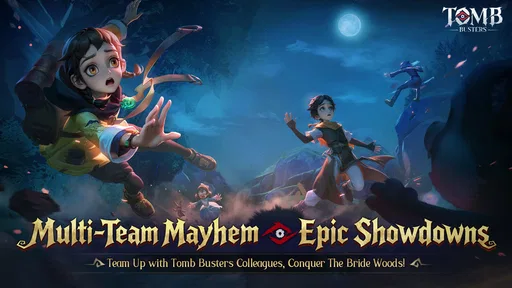
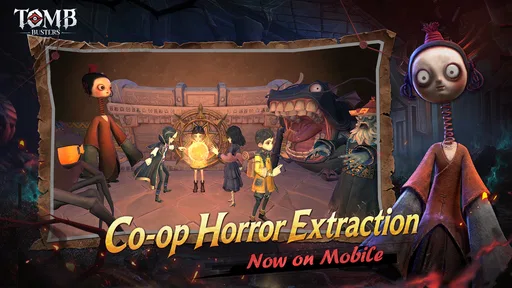
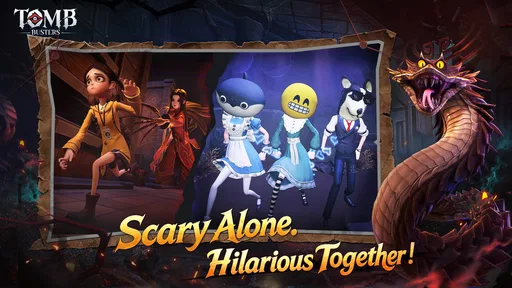
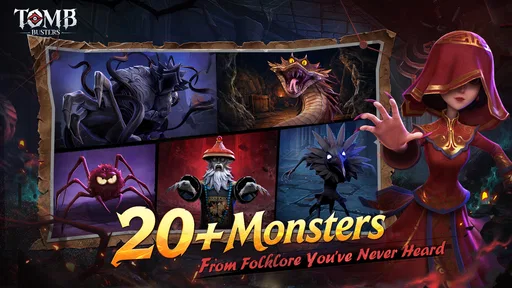
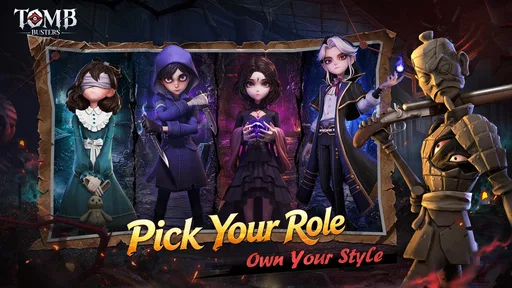
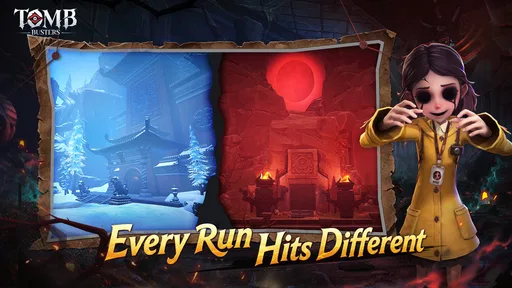
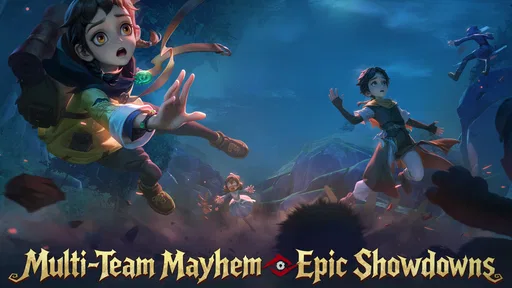
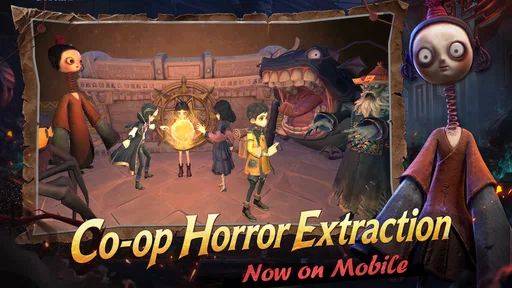
Our Review of Tomb Busters
 Analysis by Appyee
I went into Tomb Busters expecting a quick horror game with a silly edge, and that is exactly the mood it creates best. This is a free adventure game from Giant Game built around cooperative horror extraction, so the appeal is not only surviving frightening situations but also trying to get through them with other people while everything starts to go wrong. The combination gives it a lighter personality than a purely serious horror title, although the danger still needs to be taken seriously when a run begins to unravel.
What makes it interesting to me is the tension between comedy and caution. A funny moment can make a failed attempt memorable, but it does not remove the pressure of deciding when to continue and when to leave. That basic push and pull gives the game a clearer identity than a simple collection of spooky scenes. I found myself thinking less about whether every moment was terrifying and more about whether my group had pushed our luck too far.
How the cooperative extraction idea shapes each session
The most important thing to understand is that this is not designed like a quiet, linear adventure that I would play mainly for a carefully paced story. Its central attraction is the shared expedition: enter a dangerous place, deal with the horror around you, and try to extract successfully. That structure makes communication more valuable than simply having quick reactions. Even a small disagreement about whether to move forward can change the tone of a session.
In a realistic evening scenario, I can see this working well after work or school when a few friends want something that produces stories quickly. One player may treat a suspicious area as a joke, another may want to be careful, and a third may be focused on getting out. Those different attitudes are useful because they create the social friction that cooperative horror needs. The game is at its best when everyone is involved in the decision-making rather than one person effectively playing while the others watch.
The extraction format also gives failure more weight than it would have in a standard arcade-style adventure. If I make a mistake in a conventional game, I usually think about restarting and trying the same section again. Here, the emotional result is more communal. A poor decision can become the moment everyone remembers, especially when the group was already close to safety. That makes short sessions feel meaningful even when the outcome is not successful.
At the same time, players should not confuse a humorous presentation with a relaxed experience. The word “horror” still matters. The game’s comedy may soften the atmosphere, but the underlying appeal depends on uncertainty and pressure. Anyone looking for a completely calm cooperative game may find its sudden danger and extraction focus more stressful than expected.
Why teamwork matters more than simply joining a group
Co-op games often advertise teamwork while allowing every player to behave like a solo character standing next to others. The extraction premise creates a stronger reason to stay connected. I would approach a session by agreeing on a simple plan before entering: who is watching the route, who is checking risky areas, and what signs would make the group turn back. Even without complicated communication, that kind of discipline can prevent the usual confusion.
One useful habit is to treat the retreat decision as part of the objective rather than as an admission of failure. Players who wait until the situation is obviously hopeless may discover that leaving is no longer easy. In my view, the best cooperative groups will discuss risk early, while there is still time to change direction. That is a more interesting skill than rushing toward every possible reward or scare.
Another practical tip is to keep callouts short. Horror co-op becomes noisy when everyone describes every detail at once. A quick warning, a location, and a clear instruction are more useful than a long explanation. This is especially important for groups playing casually, because the game’s comic tone can encourage people to talk over one another until a real threat appears.
The experience is also likely to depend heavily on the people I play with. Friends who enjoy teasing each other and recovering from mistakes should get more out of it than players who become frustrated whenever a run goes badly. I would not choose it for a group that wants perfectly controlled progress. I would choose it for people who enjoy shared uncertainty and can laugh when a confident plan collapses.
Progress, pressure, and the cost of taking another chance
The extraction structure naturally creates a question that follows me through a session: is the next step worth the risk? That question is more important than simply moving from one area to another. A cautious player may want to leave while the group still has control, while an adventurous player may believe that one more attempt will produce a better result. Neither approach is automatically correct, and that uncertainty is where the game earns much of its tension.
I especially like the way this kind of design turns restraint into a skill. In many adventure games, progress comes from pushing forward almost all the time. Here, a successful retreat can be the smartest outcome. That makes the game suitable for players who enjoy reading a situation and managing nerves, but less suitable for anyone who wants a constant stream of obvious rewards and uninterrupted advancement.
There is also a social pressure that does not appear in solo play. If one teammate wants to continue, leaving can feel like letting the group down. I would recommend agreeing before a run that any player can call for a retreat and that the group will at least discuss it. This simple rule reduces arguments and makes the result feel fairer, particularly when the game has already created enough tension.
Players wondering whether the game is mainly about frightening atmosphere or about long-term progression should approach it as a blend, with the cooperative extraction loop doing most of the work. The appeal is in repeating the situation with different decisions and different group reactions, not in assuming that one successful attempt will explain everything. That replay value is strongest when I have people willing to experiment rather than demanding a fixed, predictable route.
Spending, fairness, and what the free entry point means
The game is free to download, which makes it easy to try without committing money at the start. It includes optional in-app purchases priced from $0.99 to $99.99 per item. That is the key spending context I would keep in mind before playing: the entry cost is low, but the available purchase range is broad, so I would decide on a personal limit before browsing any optional items.
I am careful not to treat a free download as automatically fair or unfair. The important question is whether spending changes the competitive balance or simply offers convenience or customization, and that distinction should be checked directly in the game before buying. I would not make a purchase based only on the presence of a large top-end price. Likewise, I would not assume that avoiding purchases guarantees a disadvantage. The sensible approach is to play first, understand what is being offered, and spend only when the value is clear to me.
For a cooperative horror game, fairness has two sides. There is fairness between players, and there is fairness in how the game asks for money. If purchases affect only personal presentation or optional extras, that is a very different situation from purchases that determine who can survive or progress more easily. Because those are meaningful differences, I would pay attention to the wording and function of each item rather than judging the entire system from the price range alone.
My practical advice is to avoid buying anything during the excitement of a failed run. Extraction games create a natural urge to recover immediately, and that is exactly when an optional purchase can feel more necessary than it really is. I would finish several sessions, decide whether I enjoy the core loop, and then consider spending. If the game is fun without payment, that is a healthier basis for any later choice than frustration after a bad attempt.
Families should also notice the Teen content rating. That does not tell me every detail of the experience, but it is a clear reason to consider the intended audience before installing it on a shared device. I would recommend that younger players use a game selected by a parent or guardian rather than assuming that a humorous style makes the content suitable for everyone.
Where it fits beside other adventure and horror games
Compared with a traditional adventure game, this one places more emphasis on group decisions and escaping safely than on simply completing a sequence of story objectives. That makes it a better choice when I want conversation, surprise, and the possibility of a memorable failure. A story-focused player who prefers to control the pace and absorb a narrative alone may be happier with a conventional adventure instead.
Compared with a serious horror game, the comic angle makes the experience easier to share with friends who might avoid relentless bleakness. The trade-off is that the jokes can reduce the oppressive atmosphere for players who want horror to remain intense from beginning to end. I see the humor as part of the game’s identity, not as a minor decoration, so I would choose another title if my priority were sustained dread.
It also differs from a purely competitive multiplayer game. The main pleasure here is not necessarily proving that I am better than the people beside me. It is coordinating with them while the situation becomes unstable. That can make the game more welcoming to mixed-skill groups, although players who need a precise competitive ladder or a strong winner-versus-loser structure may find the focus less satisfying.
The strongest alternative depends on what I want that evening. For a relaxed social session, this game’s humor and shared danger are useful. For a deep solo adventure, a narrative-led title would probably serve me better. For an esports-style challenge, a dedicated competitive game would be the clearer choice. Tomb Busters earns its place when the group itself is part of the entertainment.
Device expectations and the practical starting point
The current version is 1.31.30.002, and the game requires Android 9 or later. That makes checking the operating system a sensible first step before planning a session, especially if I am installing it on an older phone or tablet. I would also leave enough storage and battery for a cooperative play session rather than beginning an important run immediately after a long day of use.
The game has reached over 100 thousand installs, with an average rating of 4.4 from around 1.9 thousand ratings and 303 reviews. Those figures suggest that it has attracted a meaningful audience and that the general response is positive, but they do not replace my own test of the things that matter most: whether my device handles it comfortably, whether I enjoy the extraction rhythm, and whether my friends are available to play.
I would start with a short session rather than buying anything or inviting a large group immediately. That lets me see whether the tone works for me, whether the horror-comedy balance feels natural, and whether the game’s pressure is exciting or simply tiring. It also gives me a chance to learn how I prefer to communicate before a more serious cooperative attempt.
The unanswered questions that should shape a purchase decision
A reader may reasonably wonder how much the experience changes when playing alone. My answer is that the game’s central identity points toward cooperation, so I would treat solo play as a secondary way to explore rather than the reason to choose it. If I usually play without friends, I would first confirm that the available play options fit my habits before investing time or money.
Another question is whether a casual group can enjoy it without mastering complicated strategies. I think casual players can get value from the basic idea because the social reactions are part of the fun. Still, the group should be comfortable with failed attempts and changing plans. Players who need every session to produce clear progress may become impatient with the uncertainty that makes extraction games distinctive.
People also ask whether the humor weakens the horror. In my experience of the concept, it changes the kind of horror rather than removing it. The game is better understood as a tense, mischievous group adventure than as a pure fear simulator. That distinction matters: someone seeking laughs around frightening situations should feel at home, while someone seeking an uncompromising atmosphere should look elsewhere.
The spending question deserves the same careful answer. The game can be entered for free, and optional items range from small purchases to a much higher-priced item. I would not spend until I know exactly what an item changes and whether that change matters to my enjoyment. The safest recommendation is to treat purchases as optional extras, not as a requirement for proving that the game is worth playing.
Finally, users may wonder whether the game is suitable for children because its presentation is funny. The Teen rating means I would not make that assumption. Parents should review the game’s suitability for their household, and adult players should remember that the comedic style does not erase its horror content.
My trust verdict after weighing the whole package
I recommend Tomb Busters to players who want a free cooperative adventure with horror pressure, comic relief, and decisions that can turn a promising run into a desperate escape. Its best quality is the way it gives the group something to discuss: when to risk more, when to retreat, and how to recover after a bad call. That is more engaging to me than a game that simply points toward the next objective.
I would skip it if I wanted a carefully controlled solo story, a consistently serious horror mood, or a competitive game where personal performance is the main measure of success. I would also be cautious if optional purchases tend to tempt me during frustrating moments. The broad purchase range makes it especially important to keep spending deliberate rather than emotional.
Giant Game has positioned this as an accessible adventure for people who enjoy the social side of horror. The free starting point, Teen rating, Android 9 requirement, and current version make the practical decision straightforward: check the device, consider the intended audience, and try the core experience before spending. The positive response from its existing audience is encouraging, but the real test is whether your own group enjoys the risk-and-retreat rhythm.
My final view is favorable, with a clear condition: play it for the shared stories, not for a guaranteed power fantasy. When everyone accepts that a failed extraction can still be entertaining, the game’s strange mixture of danger and comedy works well. The smartest way to approach it is to test the free experience first, agree on a spending boundary, and treat a successful escape as a team achievement rather than a reason to chase every possible risk.
Verdict
Strengths of Tomb Busters
- Fast-paced levels are ideal for short gaming sessions.
- Simple controls make it easy for new players to pick up.
- Enemy variety keeps later stages from feeling too repetitive.
- Upgrade choices add a satisfying sense of progression.
- Bright visuals make the action easy to follow on small screens.
Limitations of Tomb Busters
- Difficulty can spike suddenly in some tomb sections.
- Repeated runs may feel grindy when chasing stronger upgrades.
- On-screen action can become cluttered during large enemy waves.
- Some content may take considerable time or effort to unlock.
- The game may be less enjoyable for players seeking a deep story.
Similar Picks in This Category
View All
Roblox
Roblox Corporation4.2

Pokémon GO
Niantic, Inc.3.5

Ninja warrior: legend of adven
TOH Games4.6

Ninja Arashi
Black Panther4.6

Eyes - The Horror Game
Fearless Games sp. j.4.5

Critical Action:Gun Strike Ops
FPS Shooter & Action Game4.3
Frequently Asked Questions
What is Tomb Busters?
Tomb Busters is an adventure game centered on exploring dangerous tombs, overcoming traps, defeating enemies, and collecting valuable rewards. Its gameplay combines exploration, action, and progression, making each expedition feel different as you move through increasingly challenging areas. Before downloading, players should expect a casual experience designed around short sessions, repeated attempts, and gradually improving their character or equipment.
How does the gameplay work in Tomb Busters?
The main gameplay loop involves entering tombs, navigating obstacles, fighting hostile creatures or guardians, gathering loot, and trying to reach the end of each stage. Controls are generally designed for mobile devices, so new players can learn the basics quickly. However, success depends on timing, positioning, and choosing the right upgrades rather than simply moving forward without a strategy.
Is Tomb Busters free to download and play?
Tomb Busters can generally be downloaded without an upfront purchase, but the exact monetization model may include advertisements, optional in-app purchases, or both. These purchases may provide extra resources, cosmetic items, boosts, or faster progression. Players who prefer not to spend money should review the store listing and disable accidental purchases, especially if children will be using the device.
Can Tomb Busters be played offline?
Offline availability may depend on the specific version and the feature being used. Core stages might work without a continuous connection, while advertisements, cloud saving, online events, leaderboards, or account-related functions may require internet access. It is best to launch the game once while connected and test the main features before relying on Tomb Busters during travel or in areas with limited coverage.
Is Tomb Busters suitable for children and casual players?
Tomb Busters may appeal to casual players because its basic controls and objective are easy to understand, while the tombs provide enough hazards and enemies to keep the experience engaging. Parents should still check the official age rating, advertising policy, and in-app purchase settings before installation. Players who dislike repetition or frequent promotional prompts may find the progression less appealing over time.
Play our best games!


